Let’s Give Kids Space to Figure Things Out Themselves
Maybe not every toy dispute needs a two-minute timer and a gentle script
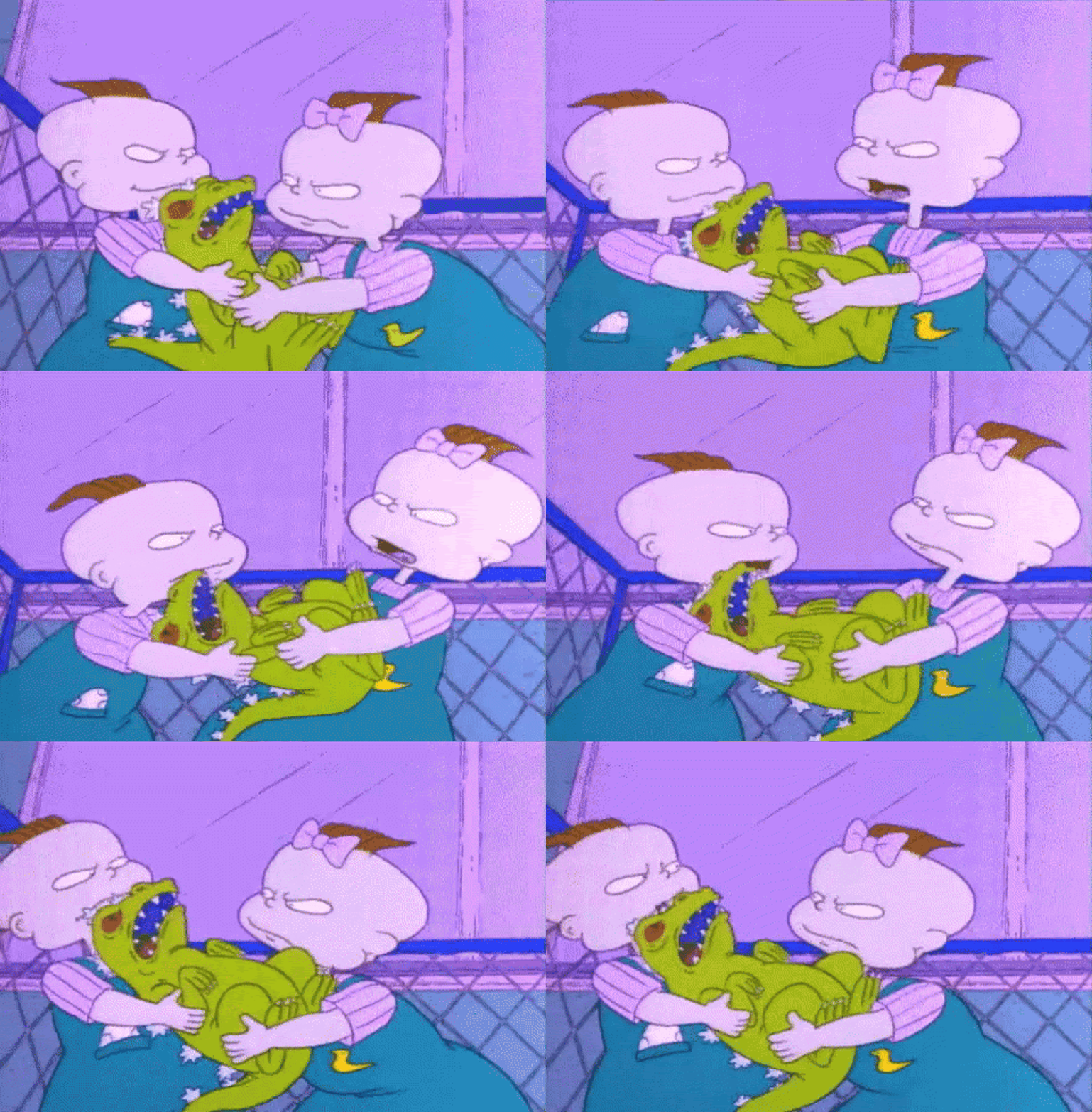
Source: Tenor
It’s been a long morning and I’ve finally managed to get my two kids out of the house and to the park. Somehow, it’s only 10:15 a.m.
Both kids head for the sandbox. My four-year-old son picks up a dump truck beside another kid, and the kid cries. His dad immediately steps in and says, "It's OK, we have to share. Share!"
Now I’m wondering what I’m supposed to do. Do I tell my son to give it back, or supervise the turn-taking? Or do I set a two-minute timer like we’re managing a hostage negotiation?
Meanwhile, my one-and-a-half-year-old is eating rocks like they’re complimentary snacks.
The dad keeps hovering. “Let’s give this kid some space. Personal space!” And part of me is thinking: Can’t they just figure this out?
How We Worked It Out in the ’90s
When we were kids, I’m pretty sure my parents sat on a bench talking to other adults at the playground. And unless someone was bleeding, we were largely expected to sort out the small stuff ourselves.
Think about Bop It: four kids crowded around one toy, arguing over turns, scores and who cheated. Nobody’s parents appeared to facilitate a conversation about fairness or emotional regulation. We fought and someone stormed off. Then five minutes later, someone showed up with Dunkaroos and everyone moved on. That was conflict resolution in the ’90s.
It wasn’t necessarily better parenting, but we did get plenty of practice being annoyed with other kids without an adult immediately fixing it.
When Everything Became a Teachable Moment
Today, we know more about helping kids name feelings, respect boundaries and repair conflict. That’s a good thing.
But sometimes it feels like every childhood interaction has become something we’re supposed to manage in real time. A toy dispute becomes a lesson in sharing. A playground disagreement becomes a workshop in empathy.
And I find myself wondering, am I stepping in because my kid actually needs me or because every other parent is stepping in too?
Four-year-olds grab toys. They hate waiting. They often think “sharing” means getting something “now.” That doesn’t make them bad kids. It makes them small people with big feelings and very limited impulse control.
What Are People Doing Instead

Taking a three-step approach to helping kids navigate conflict

Teaching toddlers to share

Resisting pressures to teach their child to share
Maybe Kids Need Small Conflicts
I want my kids to be kind. I want them to notice other people, apologize when they need to and recover from disappointment. But I’m also not trying to raise a tiny Buddhist monk who can peacefully surrender a Tonka truck after three seconds of emotional reflection.
Maybe there’s something worth borrowing from our childhoods: a little more space to figure things out. Not total hands-off parenting. If someone’s getting hurt, I’m stepping in. But perhaps I don’t need to referee every sandbox negotiation.
I can stay close enough to help when they need me and far enough away to let them struggle with the small stuff.
Let them argue over the dump truck. Let them be annoyed. Let them discover that another kid getting a turn is not the end of the world. And if things get really tense, maybe someone can bring Dunkaroos.
Around the Web
Keep reading

Riding In Cars with Babies
Almost every parent has a similar memory: buckling their tiny newborn into a car seat, walking out of the hospital to the parked car, and carefully securing the car seat into its base in one of the back seats. Driving home with your baby – whether it was 10 minutes away or an hour – felt like the most nerve-wracking ride of your life.…

Welcome to a Nut-Free World
My toddler’s preschool is loudly nut-free. There’s a sign near the entrance.…

When Did Parents Stop Going Out at Night?
m. because “that’s the sweet spot before someone has a meltdown ahead of naptime.”…